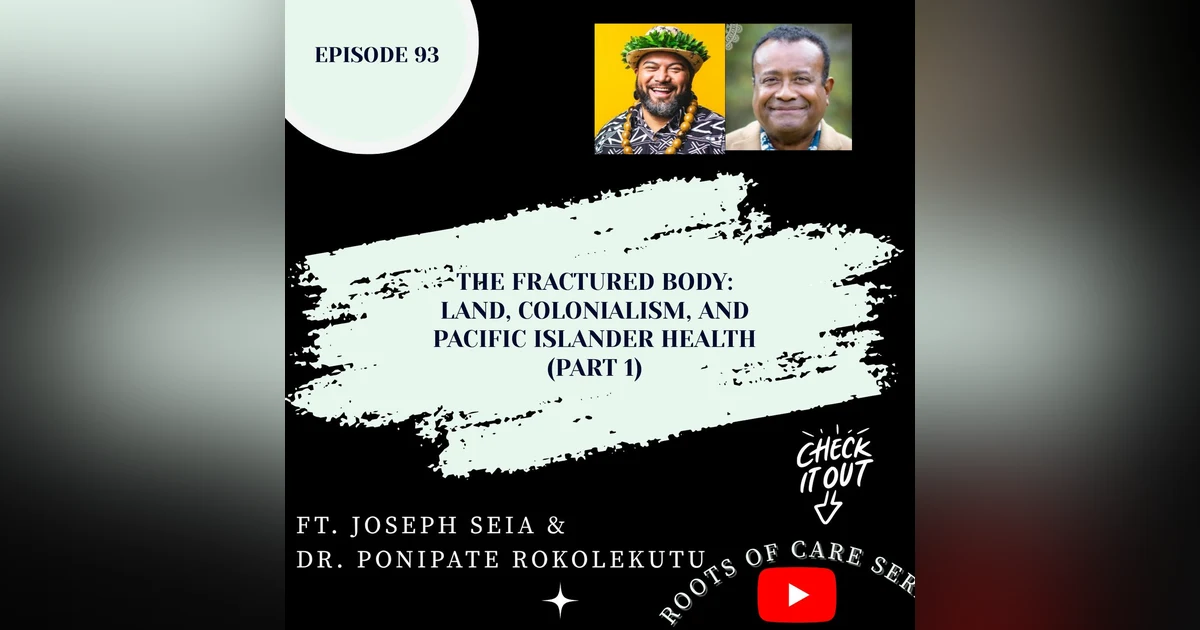
93 I The Fractured Body: Land, Colonialism, and Pacific Islander Health (Part 1)


 Apple Podcasts

 Spotify

 RSS Feed

 Amazon Music
Check out the full series on Youtube - Roots of Care Series
Overview:
We explore how colonialism and land dispossession have shaped the health, identity, and knowledge systems of Pacific Islander communities, diving into the concepts of land as vanua (and its importance as relationship, culture, and epistemology), and confronting the deep generational impact of fractured identities. We examine why Western medicine’s approach, focused on the individual body and standardized solutions, fails to address the collective and generational trauma experienced by Indigenous peoples, and why true healing requires a reckoning with colonial history, restoring relationships, and incorporating Indigenous knowledge into our understanding of health. By centering conversations on the lived experiences and knowledge of Pacific Islander communities, we challenge clinicians and healthcare systems to rethink diagnoses, recognize historical and structural determinants, and take responsibility for repairing harm.
Three Takeaways:
1. Colonialism as an Underdiagnosed Health Condition
The conversation focused on the concept that colonialism operates not only as a historical event but as an ongoing, underdiagnosed health condition for Indigenous and Pacific Islander communities. The lasting effects of land dispossession, cultural disruption, and forced assimilation manifest in physical, mental, and spiritual illness, yet these root causes are largely omitted from Western medical practice and diagnosis
2. The Fractured Body and Knowledge Systems
One concept discussed was the idea of the "fractured body," which refers to the internal conflict caused by replacing Indigenous knowledge and identity with Western education and religious systems. This results in a person "coming out as a white man in a Black body," highlighting the psychological and spiritual fragmentation inherent in colonial legacies
3. Internalized Oppression and Community Response
A key theme that emerged was how colonialism’s violence is perpetuated through internalized inferiority and avoidance behaviors, such as substance use or religious coping, as well as amnesia regarding historical trauma. At the same time, there is a movement for consciousness-raising and cultural resilience within the diaspora and alliances with other marginalized communities to reclaim dignity and health
Guests -Ponipate Rokolekutu, PhD — Assistant Professor of Critical Pacific Islands and Oceania Studies, Department of Race and Resistance Studies, College of Ethnic Studies, San Francisco State University. -Joseph Seia, MPA — Executive Director, Oceania Northwest, and founder of the Pacific Islander Community Association of Washington (PICA-WA). Of Samoan and Tongan ancestry. Terms used in this episode -Vanua (Fijian) — land, and with it people, custom, identity, and relationship. Cognates across Oceania: fanua (Samoan), fonua (Tongan), honua and ʻāina (Hawaiian), whenua (Māori). -iTaukei — Indigenous Fijian. -Mata ni Vanua — literally "eye of the land"; the chiefly spokesperson. -Taulāsea — Samoan traditional healer. -Fofō — to treat or remedy; also traditional Samoan massage. -Talanoa — a Pacific form of conversation and inquiry. -Dalo — taro. -E fofo le alamea le alamea — the remedy for the crown-of-thorns starfish is the starfish itself. About Roots of Care A four-part series on whole-person, trauma-informed, and community-centered primary care, produced as part of the Healthcare for Humans podcast.
Next Step:
- Visit our website, Healthcare for Humans, and join our community to enjoy exclusive benefits at https://www.healthcareforhumans.org/support/
- Support Our Mission: Non-clinicians, explore exclusive content and contribute to our collective journey.
- Be an Active Participant: Go beyond listening. Shape our narrative by co-creating episodes with us.
- Be part of our community by visiting https://www.healthcareforhumans.org/support/. Follow us on Instagram @healthcareforhumanspodcast

