
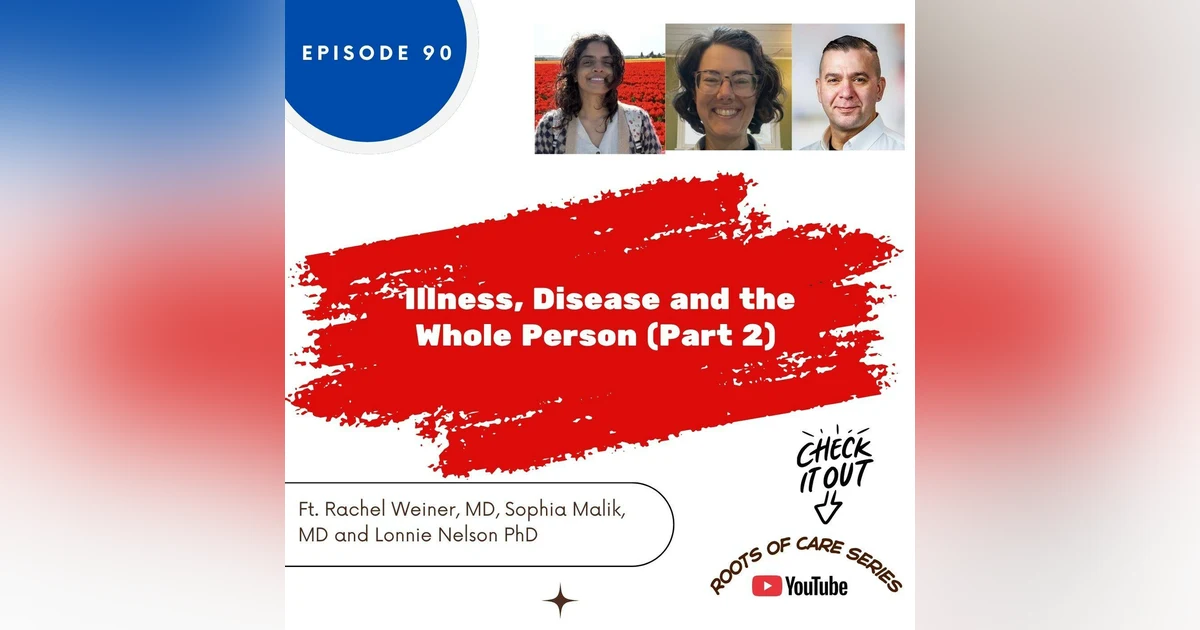
90 I Illness, Disease and the Whole Person (Part 1)


 Apple Podcasts
 Spotify
 RSS Feed
 Amazon Music
 Check out the full series on Youtube - Roots of Care Series
Overview:
We continue our Roots of Care series by challenging the notion of clinicians as mere “fixers” and exploring what it truly means to provide healing in contexts where much of a patient's health lies outside the exam room. Drawing on polyvagal theory, somatic practices, and indigenous wisdom, we examine the importance of creating containers of safety, fostering genuine presence, and supporting patient autonomy and choice. We reflect on the pressures created by a profit-driven healthcare system, the impact of clinician self-regulation, and the value of compassion, friendship, and honoring our own needs alongside those of our patients. Through practical tools and honest discussion, we seek ways to reimagine care, cultivate resilience, and find meaning and humanity in the clinician-patient relationship.
Three Takeaways: 1. Redefining the Clinician's Role: From Fixer to Facilitator
One central theme was the shift in self-perception required for healthcare providers: moving away from the ingrained idea of being the "fixer" and acknowledging that most health determinants sit outside the exam room. The real role becomes creating a container of safety, presence, and supporting patients’ own agency in healing
2. The Power of Choice and Autonomy in Healing Relationships
We highlighted that true healing often begins with supporting and honoring patient choice, even if that means accepting noncompliance or resisting the urge to impose one's own agenda as a provider. Providing real choice helps move beyond the “difficult patient” narrative and centers healing in the patient, not the physician
3. Co-Regulation and Authentic Presence as Core Clinical Tools
The episode drew from polyvagal theory—emphasizing that a physician's self-regulation is foundational. Providers who are present and grounded have a physiological impact on the patient, helping them feel safe and “co-regulate,” especially in high-intensity or emotionally charged clinical encounters
Guests
- Sophia Malik, MD, MPH — Family physician and Somatic Experiencing® Practitioner (https://drsophiamalik.substack.com)
- Rachel Weiner, MD, MPH — Family physician
- Lonnie A. Nelson, PhD — Clinical psychologist; researcher in Native health
Resources mentioned
Books
- Vine Deloria Jr., The World We Used to Live In: Remembering the Power of the Medicine Man
- Efu Nyaki, Healing Trauma through Family Constellations and Somatic Experiencing: Ancestral Wisdom from the Snail Clan of Tanzania
- Alondra Nelson, Body and Soul: The Black Panther Party and the Fight against Medical Discrimination
- Howard Thurman, Jesus and the Disinherited
- Dean Spade, Love in a Fcked-Up World*
- Peter Ralston, The Principles of Effortless Power
About Roots of Care A series on whole-person, trauma-informed, and community-centered primary care, produced as part of the Healthcare for Humans podcast.
Next Step:
- Visit our website, Healthcare for Humans, and join our community to enjoy exclusive benefits at https://www.healthcareforhumans.org/support/
- Support Our Mission: Non-clinicians, explore exclusive content and contribute to our collective journey.
- Be an Active Participant: Go beyond listening. Shape our narrative by co-creating episodes with us.
- Be part of our community by visiting https://www.healthcareforhumans.org/support/. Follow us on Instagram @healthcareforhumanspodcast

