
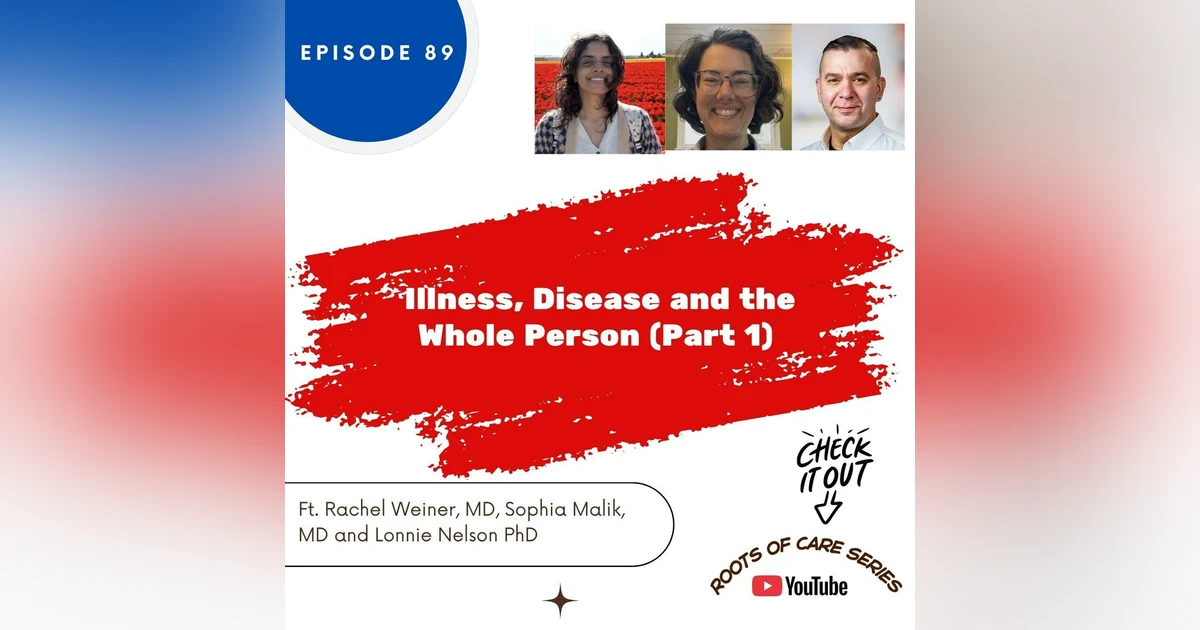
89 I Illness, Disease and the Whole Person (Part 1)


 Apple Podcasts
 Spotify
 RSS Feed
 Amazon Music
 Check out the full series on Youtube - Roots of Care Series
Overview:
We explore the limitations of mechanistic models in medicine and emphasize the importance of seeing patients as whole beings shaped by history, context, land, and community. Through candid conversation among clinicians trained in somatic experiencing, compassionate inquiry, and research with Indigenous communities, we reflect on how social determinants, trauma, and systemic violence contribute to disease and impact the patient experience. We discuss the value and complexity of diagnosis—how it can be both validating and reductive—and address how healing is fostered through relationship, safety, and the recognition of environmental, emotional, and intergenerational influences on health. By sharing personal stories and practical challenges, we highlight the need for culturally responsive, holistic care and the ongoing journey to create safer, more healing spaces within healthcare.
Three Takeaways:
1. The Mechanistic Model of Medicine Can Miss the Person
Raj , Sophia, and Rachel emphasized how current medical practice often treats bodies like machines—focusing exclusively on metrics like LDL or blood pressure instead of the broader context of a person's life. As Rachel points out, this oversimplifies health and neglects relationship, humanity, and the underlying reasons behind conditions such as hypertension
2. Holistic Health: Mind, Body, Spirit, and Environment Are Inseparable Lonnie highlighted the Indigenous worldview where physical, mental, emotional, spiritual, and environmental well-being are seen as interconnected. Assigning an ICD code for social determinants of health is a step, but true health can't exist if, for example, someone lives in a toxic dump or feels consistently invalidated in life
3. Diagnosis as Identity: The Double-Edged Sword Sophia Malik described the complex relationship people can have with diagnostic labels. Many feel validated by finally having a diagnosis—especially after years of dismissal—but there's a risk of merging identity with illness (e.g., "I am depression" or "I am ADHD"), which can perpetuate suffering and overlook other dimensions of the self.
Guests
- Sophia Malik, MD, MPH — Family physician and Somatic Experiencing® Practitioner (https://drsophiamalik.substack.com)
- Rachel Weiner, MD, MPH — Family physician
- Lonnie A. Nelson, PhD — Clinical psychologist; researcher in Native health
Resources mentioned
Books
- Vine Deloria Jr., The World We Used to Live In: Remembering the Power of the Medicine Man
- Efu Nyaki, Healing Trauma through Family Constellations and Somatic Experiencing: Ancestral Wisdom from the Snail Clan of Tanzania
- Alondra Nelson, Body and Soul: The Black Panther Party and the Fight against Medical Discrimination
- Howard Thurman, Jesus and the Disinherited
- Dean Spade, Love in a Fcked-Up World*
- Peter Ralston, The Principles of Effortless Power
About Roots of Care A series on whole-person, trauma-informed, and community-centered primary care, produced as part of the Healthcare for Humans podcast.
Next Step:
- Visit our website, Healthcare for Humans, and join our community to enjoy exclusive benefits at https://www.healthcareforhumans.org/support/
- Support Our Mission: Non-clinicians, explore exclusive content and contribute to our collective journey.
- Be an Active Participant: Go beyond listening. Shape our narrative by co-creating episodes with us.
- Be part of our community by visiting https://www.healthcareforhumans.org/support/. Follow us on Instagram @healthcareforhumanspodcast

