
Episodes
21
June 13, 2023
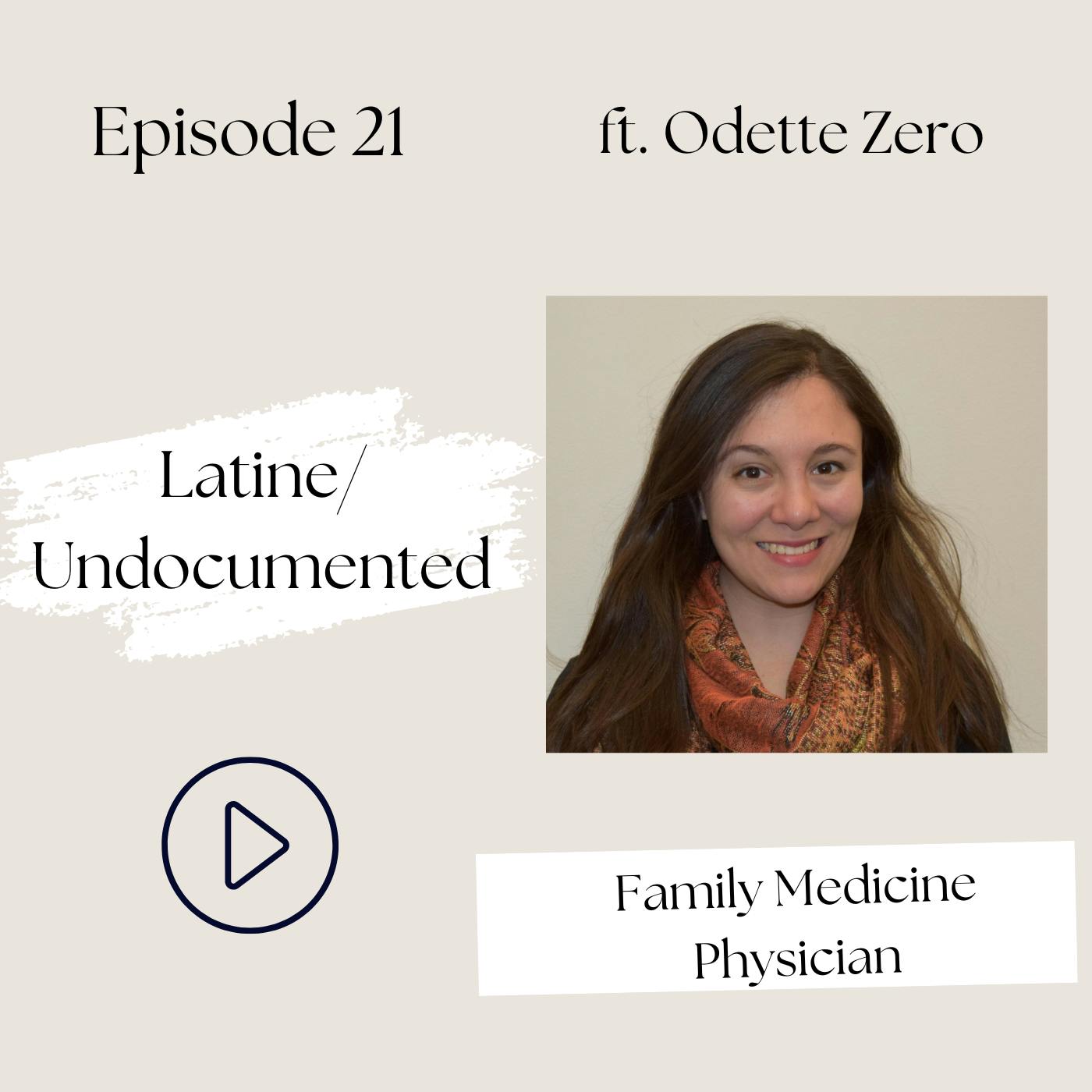
21 I Latine/Caring for Undocumented Latinx Patients Through Illness Narratives (Dr. Odette Zero)
Be part of our community by visiting https://www.healthcareforhumans.org/support/. Follow us on Instagram @healthcareforhumanspodcast How can we make sense of suffering and create meaning in our lives through illness narratives? Join us as we welcome our special guest Odette, a family medicine physician who specializes in caring for the Latinx community, particularly undocumented individuals. In this captivating conversation, Odette shares her personal experiences with illness narratives in Gua...
Guest: Odette Zero

20
May 29, 2023
20 I AAPI—Do You Even Know Who The "Cham Refugees" Are? (Tagoipah Mathno)
Join us for an insightful conversation with Tagoipah, a second-generation Cham refugee from the greater Seattle area. Tagoipah shares the important distinction between refugees and immigrants and how their families and community were forced to flee Southeast Asia during the Vietnam War and the Khmer Rouge era. We also explore the rich history and identity of the Cham people, an indigenous minority group from Southeast Asia, and how their long history has been shaped by various empires and assimi...
Guests: Tagoipah Mathno , Raj Sundar

19
May 14, 2023
19 I Latine/Afro-Latinx—What Do You Mean Black AND Latinx? Navigating Racial and Coloristic Oppression as an Afro-Latina (Sandra Huber)
In this episode, we dive deep into the Afro-Latino Latinx identity, as experienced by Sandra Huber from Panama to the United States, where her identity shifted from being simply Panamanian to being labeled as Hispanic, Latina, and eventually Afro-Latina. We discuss the challenges of navigating racial and coloristic oppression within Indian and Latin American communities, as well as within broader American society. We also touch on the importance of acknowledging and accepting one's blackness an...
Guest: Sandra Huber

18
April 24, 2023
18 I Latine/DACA-From Undocumented Immigrant to Family Medicine Doctor: The IMPACT of DACA (Ale Duran)
In this episode, I share the inspiring journey of Dr. Duran, a family medicine resident who immigrated to the US from Mexico at the age of 14. Despite facing obstacles such as being undocumented and not having a Social Security number, Dr. Duran pursued higher education with the help of supportive individuals like her high school teacher, Mrs. Holland. We delve into the challenges Dr. Duran faced in financing her medical education and navigating the DACA program, as well as the impact it has on ...
Guests: Raj Sundar , Dr. Ale Duran

17
April 11, 2023
17 I Latine/Mexican—What's the Real Story about Mexican Immigration to the US? (Dr. Jerry Garcia)
In this episode of Healthcare for Humans, we talked to Dr. Garcia again and delve into the often-overlooked history of Mexican immigration in the United States and its connection to the labor market. From desperate times to discriminatory attitudes, we uncover the complex story of Mexican immigrants and their contributions to the country's workforce. We explore the structural causes that have shaped their history and highlight the need for accessible, safe, and responsive healthcare for all comm...
Guest: Dr. Jerry Garcia

16
March 30, 2023
16 i Latine—Wait, or is it supposed to be Hispanic, Latino, Latinx or Chicano? (Dr. Jerry Garcia, Daniel Padron)
Dr. Jerry Garcia is a professor at Texas Christian University with expertise in teaching Chicano/Latino Studies, US History, and Mexican History. He was previously the Vice President for Educational Programs at Sea Mar Museum, where he curated the new Sea Mar Museum of Chicano/a/Latino/a Culture in Seattle, WA. His deep commitment to promoting education, diversity, and inclusion has made a positive impact on the educational landscape and beyond. Daniel Joaquin Padron is a Community Health Educa...

15
March 14, 2023
15 I The Model Minority Myth—Be small, Don't take up so much space, Don't cause trouble (Dr. Denise Yu)
Next Step: Visit our website, Healthcare for Humans, and join our community to enjoy exclusive benefits at https://www.healthcareforhumans.org/support/ Earn CME Credits: Clinicians, enhance your learning by earning valuable continuing education credits while listening. Utilize your CME funds to join our community. Support Our Mission: Non-clinicians, explore exclusive content and contribute to our collective journey. Be an Active Participant: Go beyond listening. Shape our narrative by co-cr...
Guest: Denise Yu

14
Feb. 27, 2023
14 I Chinese–How do you support someone through their "immigrant sorrow"? (Ron Chew & Tessa Chu)
Ron Chew is an activist and changemaker. Since the mid-1970s, he has worked as editor of the International Examiner, director of the Wing Luke Museum of the Asian Pacific Experience, and as the executive director of the International Community Health Services Foundation (ICHS) for Seattle’s Chinatown International District (CID). He is currently the head of Ron Chew Communications. Tessa Chu is a community organizer and healthcare administrator. She serves on the board of ICHS and the Asian Hea...

13
Feb. 7, 2023
13 I Chinese–Do you REALLY know how to talk about food as medicine (Roulan Liu)
Ruolan Liu is a primary care physician who was born in Chengdu, China and immigrated to Portland, Oregon, with her parents when she was 9 years old. She spent the next two decades falling in love with the community, the people, and the rhythms of the Pacific Northwest. She speaks fluent Mandarin Chinese. After listening to this, you will be able to: Explain the different types of Chinese cuisine Describe the idea of “food as medicine” Specify how you can incorporate patients' community knowl...
Guest: Ruolan Liu

12
Jan. 24, 2023
12 I Chinese—Don't tell me that you don't know what a "twinkie" means (Connie So)
Dr. Connie So joins us today to talk about the history of the Chinese American history. Dr. Connie So, an immigrant from Hong Kong, grew up in Seattle’s Beacon Hill neighborhood. She has taught at UC Berkeley, UC Davis and Princeton University and the University of Washington. Since 1992, she has taught at the University of Washington’s American Ethnic Studies Department where she is a Professor of Teaching and the Supervisor of the Department’s Community Practicum and Internship. She is active ...
Guest: Connie So

11
Jan. 9, 2023
11 I Cambodians—Do you know what happens to unprocessed trauma? (Jennifer Huong)
This is Part II of our conversation on the Cambodian community with Jennifer Huong, a DSHS-certified Khmer interpreter and one of the founders of the Khmer Health Board Member. She was born in Kampong Cham, raised in Phnom Penh, Cambodia, escaped to Thailand refugee camps in 1981 and resettled in Salem, Oregon in mid-July 1983. She has been advocating for the community for the last 30 years as a Cultural Mediator/Caseworker and Medical Interpreter. In this conversation, you will Understand how...
Guest: Jennifer Huong

10
Dec. 14, 2022
10 I Cambodians—Let's talk about the Khmer Rouge, (James Heng)
Part I of our conversation on the Cambodian community with James Heng, a DSHS-certified Khmer interpreter and Khmer Health Board Member. In his free time, he organizes concerts and entertains the Khmer community in WA state. In this conversation, you will Understand the trauma many Khmer hold that you likely never think about Learn the perils of using a family or staff for interpreting without thinking twice Hear why there's such a stigma around mental health or being open to a diagnosis of ...
Guest: James Heng

9
Nov. 14, 2022
9 I Indians—Is Rice really THAT bad for you? (Avantika Waring)
This is part II of our conversation with Dr. Avantika Waring. Avantika is an Endocrinologist focusing on caring for people living with diabetes. She has worked with patients in various clinical settings for over 15 years and is currently the Chief Medical Officer at 9amHealth. Her clinical passion is the development of technology-enabled care delivery models that are equitable and culturally inclusive. She is originally from New Jersey but has lived on the west coast since 2009 and currently res...
Guest: Avantika Waring
8
Oct. 20, 2022
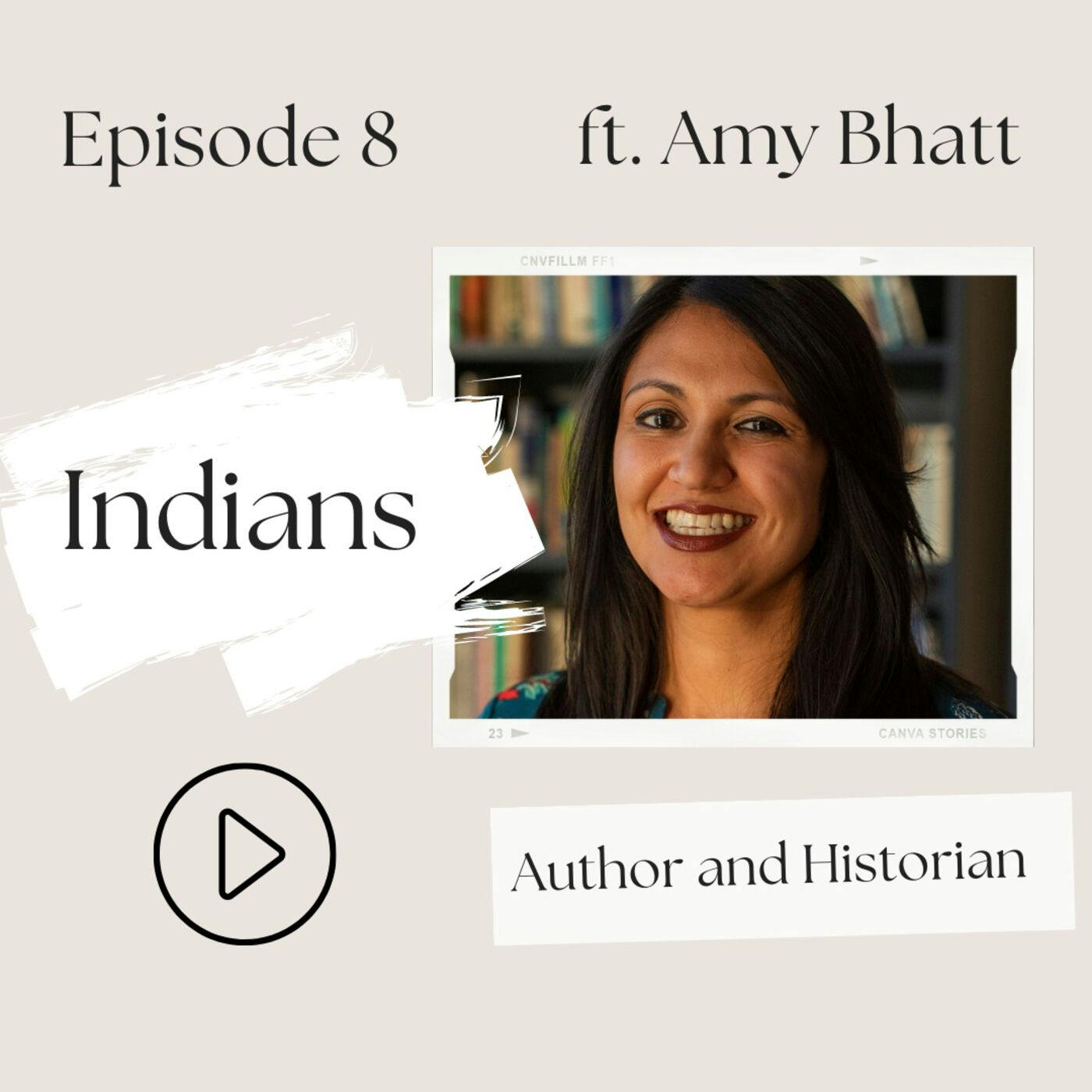
8 I Indians—Why is the Indian Diaspora so large? (Amy Bhatt)
Amy Bhatt, Ph.D. is a writer, educator, and content creator. She received her B.A. in Political Science and Women’s Studies from Emory University and her Ph.D. in Feminist Studies from the University of Washington in Seattle, WA. She is the author of High-Tech Housewives: Indian IT Workers, Gendered Labor, and Transmigration (University of Washington Press, 2018) and co-author of Roots and Reflections: South Asians in the Pacific Northwest (University of Washington Press, 2013) with Dr. Nalini ...
Guest: Amy Bhatt

7
Sept. 22, 2022
7 I Pacific Islanders—What does erasure of a community mean? (Joseph Seia)
This is part II of our conversation with Joseph Seia. Joseph is the Co-Executive Director of the National Association of Pasifika Organizations (NAOPO) and the founder of PICA-WA (Pacific Islander Community Association of Washington). To hear the introduction to this topic and the full guest intro, please listen to the previous episode. In part II, we dig deeper into several topics: decades of erasure and policy that have led to health disparities like the high rate of police killings ad homel...
Guest: Joseph Seia

6
Sept. 22, 2022
6 I Pacific Islanders—What does Tyson Farm have to do with all of this? (Joseph Seia)
Joseph Seia is the Co-Executive Director of the National Association of Pasifika Organizations (NAOPO) and the founder of PICA-WA (Pacific Islander Community Association of Washington). He has 15 years of experience in direct service, youth development work, and nonprofit leadership & administration. He labors against the political erasure of Native Hawaiian & Pacific Islander (NH/PI) communities in data and policy by re-envisioning what it means for Pasifikans to feel cultural belonging in the ...
Guest: Joseph Seia

5
Aug. 2, 2022
5 I Somalis—Can you name that supplement that everyone is taking? (Ahmed Ali,)
This is part II of our conversation with Ahmed Ali about Somalis in Washington. To hear the introduction to this topic and the full guest intro, please listen to the previous episode. Ahmed Ali is a pharmacist by profession and the executive director of the Somali Health Board. In Part II of this conversation, we talk about what to be aware of during a patient encounter like naming and traditional clothing counseling about nutrition in a culturally appropriate way review a common supplement ...
Guest: Ahmed Ali

4
Aug. 2, 2022
4 I Somalis—When was the last time you thought about Ramadan when counseling? (Ahmed Ali,)
Ahmed Ali is a pharmacist by profession, one of the founders and the current executive director of the Somali Health Board (SHB), a nonprofit organization that works to address health disparities within the Somali/East African community. He is an active member within the Somali community, with emphasis on immigrant/refugee health issues both locally and abroad. Today, in Part 1 of this conversation, we talk about the history of Somalia including the Somali Bantu population the importance of u...
Guest: Ahmed Ali

3
July 20, 2022
3 I Native Hawaiians —Do you know what Aloha and Ha’aha’a mean? (Maile Tauali‘i,)
This is part II of our conversation with Dr. Maile Taualii about Native Hawaiians and Pacific Islanders. Please listen to the previous episode to hear the introduction to this topic and the entire guest intro. Dr. Maile Taulalii is an assistant clinical investigator for Hawaii Permanente Medical Group In Part II of this conversation, we talk about cultural values such as aloha and Ha’aha’a how to communicate about health in a way that matters to the patient reconnecting with your people tal...
Guest: Maile Taualii, PhD, MPH

2
July 19, 2022
2 I Native Hawaiians—Don't tell me you went on a "vacation" to Hawaii (Maile Tauali‘i, )
https://www.healthcareforhumans.org/
Guest: Maile Taualii, PhD, MPH
1
May 24, 2022
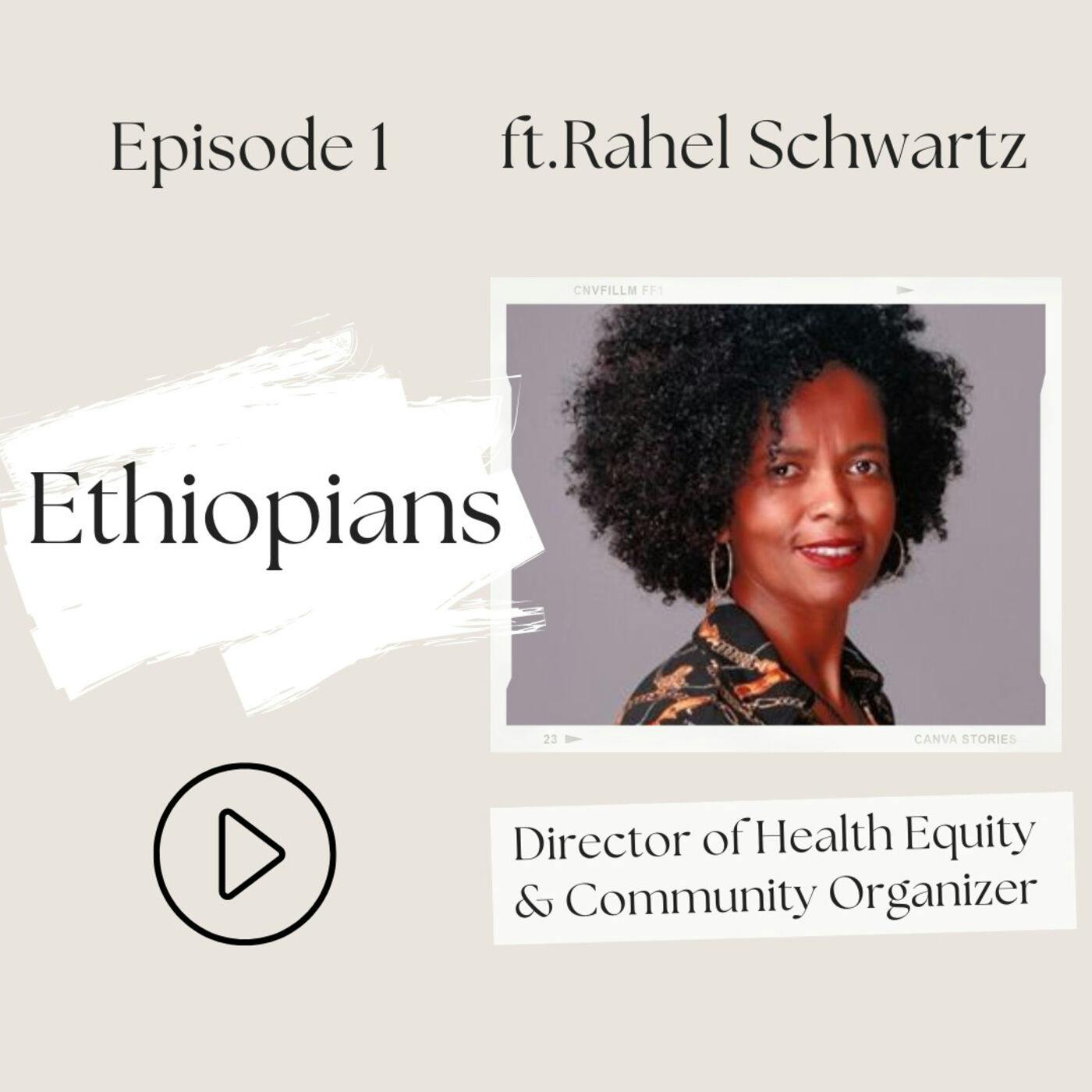
1 I Ethiopians—What's "brain waste"? (Rahel Schwartz,)
Overview: Rahel Schwartz was born in Addis Ababa, Ethiopia, and lived in Kenya and Arkansas before making her way to Seattle in 1994. She's currently the Program Executive for Health Equity at the YMCA of Greater Seattle and helps design and implement culturally and linguistically tailored chronic disease prevention programs. In this episode, we talk about the history of Ethiopian immigration in Washington, the problem of brain waste making a traditional Ethiopian diet healthier the role of...
Guest: Rahel Schwartz